
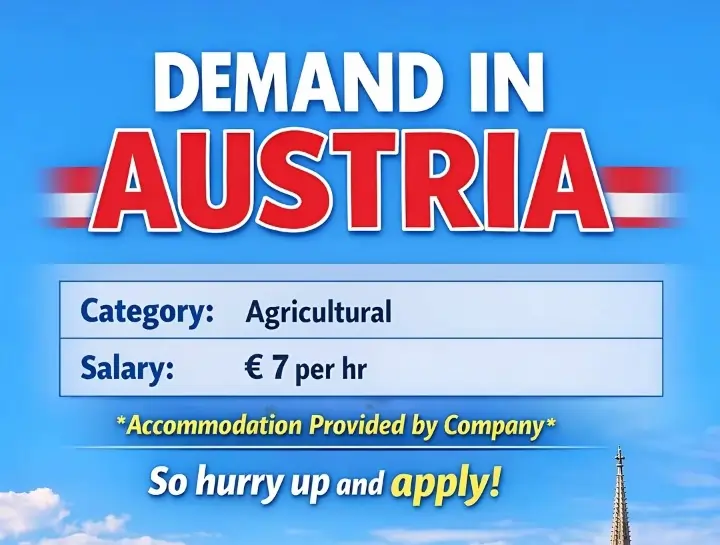

Overview of Agriculture Sector Job Opportunities in Austria
Austria’s agriculture industry is quietly becoming one of the most attractive employment sectors for international workers, particularly those seeking seasonal or entry-level opportunities in Europe. With its picturesque countryside, advanced farming technologies, and strong export market for agricultural products, Austria has steadily expanded its demand for labor in farms, orchards, dairy facilities, and food production units. As we move toward 2026, the demand for agricultural workers in Austria is expected to grow significantly, opening doors for both local and foreign job seekers.
Agriculture might sound like an old-fashioned career path, but in Austria it’s anything but outdated. Modern farms operate like well-organized businesses, blending traditional farming knowledge with innovative machinery and sustainable techniques. This combination means that farms require workers for a wide range of roles, from fruit picking and vegetable harvesting to operating machinery and assisting with livestock care.
One of the most appealing aspects of agricultural jobs in Austria is accessibility. Unlike many professional careers that demand years of academic study or specialized certifications, farm jobs often prioritize practical skills, reliability, and physical fitness. For many people hoping to work abroad, this creates a realistic pathway to international employment.
Another major attraction is the employment structure. Many farms hire workers on seasonal contracts, particularly during planting and harvesting periods. These contracts can last from a few weeks to several months, depending on the crop cycle. In some cases, seasonal jobs even lead to longer-term employment opportunities for reliable workers.
Austria’s agricultural regions, such as Lower Austria, Styria, Tyrol, and Salzburg, are especially active in hiring farm workers. These areas produce a wide variety of crops, including apples, grapes, berries, vegetables, and grains. Dairy farming is also a major part of the rural economy, meaning there is consistent demand for workers in livestock management.
For job seekers exploring opportunities abroad, Austria’s agriculture sector represents a combination of stable income, cultural experience, and accessible entry requirements. Whether someone is looking for a temporary job abroad or a stepping stone toward long-term European employment, agricultural work in Austria can be an excellent starting point.
Why Austria Needs Agricultural Workers in 2026
Austria’s agricultural workforce has been undergoing noticeable changes over the past decade. Like many European countries, Austria is facing a gradual decline in the number of local workers willing to take up physically demanding farm jobs. Younger generations often pursue careers in urban industries such as technology, finance, and tourism. As a result, farms across the country increasingly rely on international labor to maintain productivity and meet growing food demands.
The year 2026 is expected to bring even greater demand due to several important economic and demographic factors. First, Austria’s population is aging, and many experienced farmers are approaching retirement. Without sufficient new workers entering the agricultural workforce, farms must recruit labor from outside the country to sustain operations.
Another key factor is Austria’s strong agricultural export market. The country is well known for producing high-quality organic products, dairy items, fruits, and specialty crops that are exported across Europe. Maintaining these production levels requires consistent manpower during planting, harvesting, and processing seasons. For example, fruit farms in regions like Styria and Lower Austria require thousands of seasonal workers every year just to manage harvest periods efficiently.
Climate patterns are also influencing labor demand. Unpredictable weather conditions can shorten harvesting windows, meaning farms must gather crops quickly before they spoil. When harvest periods become shorter but more intense, the need for a larger temporary workforce increases dramatically.
Government policies are another contributing factor. Austria has introduced programs that make it easier for farms to hire seasonal foreign workers legally through work permits and temporary visas. These initiatives help farmers fill labor shortages while also ensuring that workers receive regulated wages and working conditions.
The agricultural sector also benefits from Austria’s strong reputation for workplace standards. Workers typically receive structured schedules, regulated working hours, and employer-provided accommodation in many cases. These benefits make Austria an appealing destination compared with other seasonal farm work destinations.
Put simply, Austria’s agriculture industry is at a turning point. To maintain its position as a leading producer of high-quality agricultural goods in Europe, the country must rely on a diverse workforce. That is why agricultural job vacancies in Austria for 2026 are expected to rise significantly, creating valuable opportunities for job seekers worldwide.
Types of Agricultural Jobs Available for Foreign Workers
When people hear the phrase “farm job,” they often imagine a single type of task—usually harvesting crops in a field. In reality, the agricultural sector in Austria offers a surprisingly wide range of roles that suit different skill levels, physical abilities, and experiences. Foreign workers looking for opportunities in 2026 will find that farm employment can include everything from hands-on harvesting work to machinery operation and livestock care.
One of the most common positions available to international workers is fruit and vegetable harvesting. Austria produces apples, grapes, strawberries, pumpkins, peppers, and many other crops that require manual harvesting. During peak seasons, farms hire large teams of workers to collect, sort, and pack produce for distribution. These jobs are ideal for individuals with strong physical stamina and the ability to work outdoors for extended periods.
Another widely available role is greenhouse and crop maintenance work. Many modern farms operate greenhouses where vegetables and herbs are grown year-round. Workers in these environments may handle tasks such as planting seedlings, watering crops, trimming plants, and monitoring growth conditions. Compared to field harvesting, greenhouse jobs often involve more controlled working environments.
Livestock farming is also a major part of Austria’s agricultural economy. Dairy farms in regions like Tyrol and Salzburg regularly hire workers to assist with feeding animals, cleaning barns, milking cows, and maintaining farm equipment. While these jobs require more responsibility and sometimes basic training, they can also offer longer-term employment opportunities.
There are also specialized roles available for workers with certain skills. Tractor drivers, irrigation system operators, and farm machinery technicians are often needed during planting and harvesting seasons. Although these positions may require prior experience, they typically offer higher wages compared to entry-level farm work.
Packing and logistics jobs represent another important segment of the agricultural workforce. Once crops are harvested, they must be sorted, packaged, and prepared for transportation. Workers in packing facilities help ensure that products meet quality standards before being shipped to markets across Europe.
Overall, the agriculture sector in Austria offers diverse employment opportunities ranging from entry-level manual work to skilled technical roles. This variety makes the industry accessible to a broad range of workers, including those seeking their first international job experience as well as those with previous farming expertise.
Salary, Benefits, and Working Conditions
Working in Austria’s agricultural sector is not just about seasonal labor; it’s also about gaining a stable income, practical work experience, and exposure to European farming standards. For many international workers considering opportunities abroad, understanding the salary structure, benefits, and working conditions is one of the most important parts of the decision-making process. Austria’s agriculture industry, although physically demanding, offers fairly structured compensation and worker protections compared with many other seasonal labor markets.
The average salary for entry-level agricultural workers in Austria generally starts around €7 per hour, though this figure can vary depending on the farm, the type of work, and the worker’s experience. Some farms pay slightly higher wages, especially during peak harvest periods when labor demand increases significantly. In addition to hourly wages, many employers provide accommodation and sometimes meals, which can dramatically reduce a worker’s living expenses during their employment period.
Working hours typically range between 35 to 50 hours per week, depending on the season and weather conditions. During harvesting seasons, farms may require longer workdays because crops must be collected within a short time frame. However, Austrian labor regulations still apply, meaning workers are entitled to rest periods and fair treatment under employment laws.
The working environment can vary widely depending on the type of farm. Field workers often spend long hours outdoors, exposed to changing weather conditions. On the other hand, greenhouse workers and dairy farm assistants may operate in more controlled environments. Regardless of the setting, employers are expected to provide basic safety equipment and proper training to ensure workers can perform tasks safely.
Beyond wages, many farms provide additional benefits that make agricultural work more attractive. These can include free or low-cost accommodation, transportation to work sites, and access to communal kitchens or shared housing facilities. For workers traveling from other countries, having accommodation arranged by the employer removes one of the biggest challenges associated with working abroad.
Another positive aspect is the cultural experience. Living and working in rural Austria allows workers to experience traditional European village life, interact with local communities, and explore scenic countryside regions. For many international workers, the combination of income, cultural exposure, and travel opportunities makes agricultural employment in Austria a rewarding experience.
Average Salary for Farm Workers in Austria
When evaluating agricultural job opportunities abroad, understanding the earning potential is essential. In Austria, farm workers’ salaries vary based on the type of job, level of responsibility, and seasonal demand. Although agricultural work may not offer the highest wages compared with specialized professions, it still provides competitive seasonal earnings and relatively low living expenses due to employer-provided benefits.
Most entry-level farm workers in Austria earn between €7 and €10 per hour, depending on the employer and specific job role. Workers who have previous agricultural experience or specialized skills—such as operating tractors or managing irrigation systems—can often negotiate higher hourly rates. Some farms also offer productivity-based bonuses during busy harvest periods when workers help meet production targets.
The table below illustrates approximate wage ranges for common agricultural roles in Austria.
| Job Role | Average Hourly Wage | Typical Work Season |
|---|---|---|
| Fruit Picker | €7 – €9 | Spring to Autumn |
| Vegetable Harvester | €7 – €8.50 | Summer to Autumn |
| Dairy Farm Assistant | €8 – €10 | Year-Round |
| Greenhouse Worker | €7.50 – €9 | Year-Round |
| Farm Machinery Operator | €9 – €12 | Seasonal |
In addition to hourly wages, some employers provide piece-rate payment systems, especially for harvesting work. This means workers may be paid based on the amount of produce they harvest rather than strictly by the hour. For highly productive workers, this system can sometimes result in higher daily earnings.
Another factor that affects income is working hours. During busy seasons, workers may have opportunities to work overtime. If paid according to Austrian labor laws, overtime work often comes with higher hourly compensation rates.
Even though the base hourly wage might seem modest compared to urban jobs, the overall financial picture becomes more attractive when accommodation and utilities are provided. Without the burden of high rent or transportation costs, many workers can save a substantial portion of their earnings during a seasonal contract.
For people seeking short-term work abroad, Austria’s agricultural sector can therefore serve as a practical way to earn income while gaining international work experience.
Accommodation and Additional Benefits Provided by Employers
One of the biggest advantages of working in Austria’s agricultural sector is the additional support that employers often provide to their workers. Many farms understand that seasonal workers—especially those coming from abroad—may struggle to find affordable housing in rural areas. To solve this issue, employers frequently include accommodation as part of the employment package.
Accommodation arrangements can vary depending on the size and resources of the farm. Smaller farms may provide rooms within the farmhouse or nearby residential buildings. Larger agricultural operations sometimes offer dedicated worker housing facilities, which may include shared bedrooms, kitchens, bathrooms, and recreational spaces. While the living conditions are usually simple, they are designed to be practical and convenient for workers.
In many cases, accommodation is offered free of charge or at a very low monthly cost, which significantly reduces workers’ living expenses. Considering that housing is one of the largest costs in most European countries, this benefit alone can make agricultural jobs financially attractive.
Some employers also provide additional support such as:
Transportation between accommodation and work sites
Free or discounted meals during working days
Laundry facilities and internet access
Assistance with paperwork related to work permits
Another important benefit is job stability during the contract period. Seasonal contracts usually guarantee a certain number of working hours each week, giving workers a predictable income. This stability is particularly helpful for international workers who travel long distances to take up these positions.
Health and safety standards are another aspect where Austrian farms tend to perform well. Workers are generally provided with necessary safety equipment such as gloves, boots, or protective clothing depending on the type of work. Employers are also responsible for ensuring that tasks are performed in a safe environment.
Beyond the financial and logistical benefits, many workers appreciate the sense of community that develops on farms. Seasonal workers often come from different countries and cultures, creating an environment where people share experiences, learn from one another, and build lasting friendships.
For individuals considering agricultural employment abroad, these benefits make Austria stand out as a worker-friendly destination with structured support systems.
Eligibility Criteria for Agriculture Jobs in Austria
Before applying for agricultural jobs in Austria, it’s essential to understand the basic eligibility requirements that employers and immigration authorities expect from applicants. While farm work is generally more accessible than highly specialized professions, there are still certain criteria that workers must meet to qualify for employment and obtain the necessary work permits.
One of the most appealing aspects of agricultural jobs is that formal education requirements are usually minimal. Most entry-level farm positions do not require a university degree or professional certification. Instead, employers focus more on practical abilities such as physical fitness, reliability, and willingness to work in outdoor environments.
However, certain specialized roles—such as operating agricultural machinery or managing livestock operations—may require previous experience or technical training. Workers with these skills often have better chances of securing higher-paying positions on farms.
Language ability can also play a role in the hiring process. While many farms employ international workers who speak different languages, having basic knowledge of German or English can be extremely helpful. Communication is important for understanding safety instructions, coordinating tasks, and interacting with supervisors.
Another major requirement is legal work authorization. Foreign workers must typically obtain a seasonal work visa or temporary employment permit before starting work in Austria. Employers often assist with this process by providing job contracts and supporting documentation required for visa applications.
Physical fitness is another important factor. Agricultural work can involve repetitive tasks such as bending, lifting, carrying crates, and standing for long periods. Employers therefore prefer candidates who are physically capable of handling these responsibilities throughout the workday.
Employers also look for personal qualities such as punctuality, teamwork, and adaptability. Farms operate on tight schedules that depend heavily on weather conditions and crop cycles. Workers who demonstrate reliability and a strong work ethic often receive better job opportunities and may even be invited back for future seasons.
For individuals seeking international employment opportunities, meeting these eligibility criteria can open the door to stable and rewarding agricultural work in Austria’s thriving farming sector.
Educational Requirements and Skill Expectations
One of the most attractive aspects of agricultural employment in Austria is that it remains accessible to a wide range of job seekers, regardless of formal education level. Unlike corporate or highly specialized professions that require university degrees, most farm jobs focus primarily on practical abilities, work ethic, and reliability. This means that individuals who are hardworking and willing to learn can often secure employment even without extensive academic qualifications.
For entry-level positions such as fruit picking, vegetable harvesting, or greenhouse assistance, employers typically do not require advanced education. Basic literacy and the ability to follow instructions are usually sufficient. Many farms provide short on-site training sessions to help workers understand the specific tasks involved, such as sorting produce, using harvesting tools, or maintaining crop quality standards.
However, having prior experience in agriculture or manual labor can significantly increase a candidate’s chances of being hired. Employers often prefer applicants who have worked in farming, gardening, landscaping, construction, or warehouse environments, as these roles demonstrate physical endurance and familiarity with hands-on work. Even simple skills such as operating basic machinery or handling tools safely can make an applicant stand out among other candidates.
Language ability can also be an advantage. While many farms employ international workers from different countries, basic communication is still necessary for safety and coordination. Knowing basic German phrases or conversational English can help workers understand instructions, communicate with supervisors, and integrate more easily into the workplace environment. Some farms even prioritize applicants who demonstrate a willingness to learn the local language.
Technical roles in agriculture may require more specialized knowledge. Positions such as tractor drivers, irrigation system operators, greenhouse technicians, and livestock caretakers sometimes demand prior training or certifications. Workers with these skills can often secure better salaries and longer contracts because their expertise is essential for farm operations.
Soft skills are equally important in agricultural work. Employers value workers who are punctual, cooperative, and adaptable. Farm work often involves teamwork, especially during busy harvesting periods when multiple workers must coordinate tasks efficiently. Someone who shows a strong work ethic and positive attitude can quickly gain the trust of supervisors and may be invited back for future seasons.
Overall, Austria’s agriculture sector offers inclusive employment opportunities for individuals from diverse educational and professional backgrounds, making it an ideal option for those seeking international work experience without strict academic requirements.
Age Limits and Physical Fitness Requirements
Agricultural work in Austria can be physically demanding, which is why employers typically set certain age and fitness guidelines for applicants. While these requirements are generally flexible, they help ensure that workers are capable of handling the daily tasks involved in farm operations.
Most agricultural job programs in Austria accept applicants between the ages of 18 and 50 years old. This age range reflects the physical nature of farm work, which often involves lifting crates, bending for long periods during harvesting, and working outdoors in changing weather conditions. However, exceptions can sometimes be made for experienced workers who demonstrate strong physical ability and previous agricultural experience.
Physical fitness plays a major role in determining whether someone is suitable for farm work. A typical day on a farm may include activities such as walking long distances across fields, carrying baskets of produce, operating manual tools, and standing for extended periods. Workers must also be comfortable working in environments that may involve heat, cold, or rain depending on the season.
Employers generally do not require formal medical certificates for every position, but applicants should be honest about their physical capabilities. Those with serious health conditions that limit mobility or stamina may find agricultural work challenging. On the other hand, individuals who enjoy outdoor activities and active lifestyles often adapt very well to farm environments.
Another aspect employers consider is endurance and resilience. Harvest seasons can be intense because crops must be collected quickly before they spoil. Workers may occasionally work longer hours during these peak periods. Having the ability to stay energetic and focused throughout the day is therefore a valuable trait.
Despite the physical demands, many workers find farm work rewarding because it keeps them active and connected to nature. Instead of spending long hours sitting in an office, agricultural workers experience fresh air, open landscapes, and a sense of accomplishment from producing real food products.
For individuals who are healthy, energetic, and motivated, the physical aspects of farm work in Austria can become a positive and fulfilling part of the overall employment experience.
Visa and Work Permit Process for Austria Agricultural Jobs
For international workers planning to take advantage of agricultural job opportunities in Austria, understanding the visa and work permit process is essential. Since Austria is a member of the European Union and part of the Schengen Area, employment regulations are structured to ensure that foreign workers enter the country legally and receive fair working conditions.
Most non-European workers who want to work on Austrian farms must obtain a seasonal worker visa or temporary employment permit. These permits allow foreign nationals to work in specific industries—such as agriculture, tourism, and hospitality—where temporary labor shortages occur.
The seasonal worker visa is designed to support industries that experience fluctuating labor demands throughout the year. Agriculture is one of the primary sectors that rely on this system because planting and harvesting seasons require large numbers of workers for limited periods.
Employers usually play an important role in the visa process. Before a worker can apply for a permit, a farm must first offer a job contract that outlines the employment terms, including working hours, wages, and accommodation arrangements. This contract serves as proof that the worker has a legitimate employment opportunity in Austria.
Once the job offer is secured, the worker can begin the visa application process through the Austrian embassy or consulate in their home country. The process typically involves submitting documentation such as a passport, employment contract, proof of accommodation, and sometimes proof of financial stability.
Processing times can vary depending on the applicant’s country of residence and the volume of applications being handled. In many cases, seasonal worker visas are processed within a few weeks to a few months. Because agricultural jobs often have fixed starting dates, applicants are encouraged to apply well in advance to avoid delays.
Another advantage of Austria’s seasonal worker system is that it ensures legal protections for employees. Workers who enter the country through official channels are covered by labor laws that regulate wages, working hours, and workplace safety standards.
Understanding the visa process ahead of time helps applicants prepare the necessary documents and avoid potential complications. With proper planning, international workers can successfully obtain the required permits and begin their agricultural employment in Austria.
Seasonal Worker Visa Explained
Austria’s seasonal worker visa is specifically designed to address labor shortages in industries where employment demand fluctuates during certain times of the year. Agriculture is one of the sectors that benefits most from this system because farming activities often depend heavily on seasonal cycles such as planting, cultivation, and harvesting.
The seasonal visa allows foreign workers to live and work in Austria for a limited period, typically ranging from a few months up to six months depending on the employment contract. During this time, workers are legally employed by the farm or agricultural company that sponsored their application.
One of the key features of this visa is that it is job-specific. This means the worker is authorized to work only for the employer listed in the visa application. If the worker wishes to change jobs, they may need to apply for a new permit or receive approval from relevant authorities.
Seasonal workers also benefit from certain legal protections under Austrian labor regulations. These protections ensure that employees receive fair wages, safe working conditions, and access to necessary support services. Employers are required to comply with labor standards and cannot exploit workers or impose unfair employment conditions.
Another important aspect is accommodation. Many farms that hire seasonal workers provide housing as part of the employment package. This arrangement simplifies the relocation process for workers who may not be familiar with local housing markets in rural areas.
Although the seasonal worker visa is temporary, it can still be a valuable opportunity for individuals seeking international experience. Many workers return to Austria year after year during harvesting seasons, building long-term relationships with employers and gaining deeper familiarity with the country’s agricultural system.
For job seekers looking to enter the European job market, the seasonal worker visa can serve as a practical first step toward international employment and cultural exchange.
Documents Required for Austria Work Permit
Applying for an agricultural job in Austria requires preparing several important documents to support the visa and work permit application. Ensuring that these documents are accurate and complete can significantly improve the chances of approval.
The most essential document is a valid passport. Applicants must ensure that their passport remains valid for the entire duration of their planned stay in Austria. Immigration authorities may also require additional validity beyond the employment period.
Another key requirement is the employment contract or official job offer letter from an Austrian farm or agricultural company. This document confirms that the applicant has secured legitimate employment and includes details such as job role, salary, working hours, and accommodation arrangements.
Applicants may also need to submit passport-sized photographs, a completed visa application form, and proof of accommodation. If the employer is providing housing, a confirmation letter from the farm usually fulfills this requirement.
Some applicants may be asked to provide medical insurance coverage for the duration of their stay. Health insurance ensures that workers have access to medical care while living in Austria and protects both the employee and the employer in case of illness or accidents.
In certain cases, authorities might request a police clearance certificate or proof of a clean criminal record. This requirement helps ensure that workers entering the country meet legal and security standards.
Finally, applicants may need to show proof that they have enough financial resources to support themselves until they receive their first salary. While many farms provide accommodation and immediate employment, immigration authorities still require assurance that workers can manage initial expenses.
Preparing these documents carefully and submitting them on time can greatly simplify the visa approval process. With proper documentation and a valid job offer, workers can successfully obtain permission to work in Austria’s growing agricultural sector.
Step-by-Step Guide to Apply for Agriculture Jobs in Austria
Applying for agricultural jobs in Austria may seem complicated at first, especially for individuals who have never worked abroad before. However, once you understand the process step by step, it becomes much easier to navigate. The key is preparation—knowing where to search for legitimate job opportunities, understanding employer requirements, and ensuring that all application documents are ready before submission.
The first step in the application journey is researching available farm jobs in Austria. Many agricultural employers begin posting job openings months before the harvesting season starts. This early recruitment helps farms secure enough workers before peak agricultural activity begins. Job seekers should therefore start searching several months in advance to improve their chances of securing a position.
Another important step is preparing a simple but clear resume (CV). Unlike corporate resumes that focus heavily on academic achievements, agricultural job resumes should highlight practical abilities. If you have experience with farming, gardening, landscaping, construction work, or warehouse labor, these skills should be clearly mentioned. Employers want to know that applicants can handle physically demanding tasks and work reliably within a team environment.
Once the resume is ready, applicants can start submitting job applications to farms, agricultural companies, or recruitment agencies that specialize in seasonal labor. It is important to ensure that the job listings are verified and legitimate, as fake job offers occasionally appear online. Authentic employers will always provide detailed information about wages, working hours, accommodation arrangements, and visa support.
If a farm decides to hire an applicant, the employer typically sends a formal job offer or employment contract. This document becomes the foundation for the work visa application process. After receiving the contract, the applicant can proceed with submitting their visa documents to the Austrian embassy or consulate in their country.
Preparing for departure is the final stage. Workers should confirm travel arrangements, pack appropriate clothing for farm work, and familiarize themselves with basic information about Austrian culture and workplace etiquette. Taking these steps helps ensure a smooth transition into the new work environment.
Overall, applying for agricultural jobs in Austria is a structured process that rewards preparation and persistence. With the right approach, job seekers can successfully secure employment and begin their international working experience in one of Europe’s most beautiful rural landscapes.
Finding Verified Job Listings
One of the most critical steps in securing a farm job abroad is finding authentic and trustworthy job listings. Because the internet is filled with both legitimate opportunities and misleading advertisements, job seekers must carefully evaluate the sources they use during their search.
The safest place to begin is official employment portals and government-supported job boards. Many European countries, including Austria, publish agricultural job openings through public employment services. These platforms often collaborate directly with employers, which helps ensure that the listings are genuine.
Recruitment agencies specializing in seasonal agricultural work can also be valuable resources. These agencies connect farms with international workers and assist with the recruitment process. Some agencies even help candidates prepare documents, arrange travel, and understand visa requirements. However, applicants should always research the agency’s reputation before committing to any agreement.
Another effective strategy is exploring farm association websites and agricultural cooperatives. Many large farming groups post job openings on their official pages during planting and harvesting seasons. These opportunities often include detailed descriptions of the work environment, responsibilities, and compensation packages.
Social media groups and online forums can sometimes reveal job opportunities as well, particularly through communities focused on working abroad. While these platforms can be helpful, they should be approached cautiously. Applicants should verify employer details and avoid sending personal information or payment to unverified contacts.
When evaluating job listings, there are several signs that indicate a legitimate opportunity. Authentic employers typically provide clear details about:
- Hourly wages or salary structure
- Working hours and contract duration
- Accommodation arrangements
- Visa sponsorship or documentation support
- Contact information for the employer or company
If a listing lacks this information or requests large upfront payments, it should be treated with caution.
By focusing on verified sources and carefully reviewing job details, applicants can significantly reduce the risk of scams and increase their chances of securing reliable agricultural employment in Austria.
Submitting Your Application Successfully
Once a suitable job opportunity has been identified, the next step is submitting a strong application. Even though agricultural jobs may not require advanced academic qualifications, presenting a clear and professional application can make a significant difference in the hiring process.
The application typically begins with sending a resume and short introduction message to the employer. This message should briefly explain who you are, your work experience, and why you are interested in agricultural work in Austria. Keeping the tone polite and professional is important, as first impressions often influence an employer’s decision.
A well-structured resume should highlight relevant experiences such as:
- Previous farm work or harvesting experience
- Physical labor jobs like construction or warehouse work
- Skills related to tools, machinery, or gardening
- Ability to work in teams and adapt to outdoor environments
Employers also appreciate candidates who demonstrate reliability and willingness to work hard. Including references from previous employers can strengthen the application by showing that others have trusted your work ethic.
After reviewing applications, some employers may conduct short interviews through phone or video calls. These interviews are usually informal and focus on practical topics such as availability, physical fitness, and previous work experience. Applicants should answer honestly and show enthusiasm for the role.
If the employer decides to hire the applicant, they will send an official job contract. Carefully reviewing this document is essential before signing. Workers should confirm details such as salary, working hours, accommodation conditions, and contract duration.
Once the contract is signed, the worker can proceed with the visa and travel arrangements required to start the job. Proper communication with the employer throughout this process helps ensure that all steps are completed smoothly.
Submitting a well-prepared application demonstrates professionalism and commitment. Even in industries like agriculture, these qualities can significantly increase the likelihood of securing employment.
In-Demand Agriculture Roles in Austria for 2026
Austria’s agricultural industry continues to evolve as farms adopt modern techniques and expand production capacity. As a result, several roles within the sector are expected to be particularly high in demand in 2026. These positions are essential for maintaining efficient farm operations during both planting and harvesting seasons.
The most common opportunities remain entry-level roles that support crop cultivation and harvesting. However, farms are also increasingly seeking workers with specialized skills related to livestock care, greenhouse management, and agricultural machinery.
The demand for labor tends to peak during spring and autumn, when planting and harvesting activities reach their highest levels. During these periods, farms often hire large teams of seasonal workers to ensure that crops are collected quickly and efficiently.
Below is an overview of two major categories of agricultural jobs that are expected to dominate the employment landscape in Austria.
Fruit and Vegetable Harvesting Jobs
Fruit and vegetable harvesting represents one of the largest employment categories within Austria’s agricultural sector. The country is famous for producing apples, grapes, strawberries, pumpkins, peppers, and various leafy vegetables, all of which require careful manual harvesting.
During peak seasons, farms may employ dozens or even hundreds of workers to collect produce from fields and orchards. Workers are responsible for picking ripe crops, sorting them based on quality, and preparing them for packaging and transportation.
Although harvesting work can be physically demanding, it offers several advantages. The tasks are usually straightforward and can be learned quickly, making these jobs suitable for individuals with limited agricultural experience. Workers also enjoy the opportunity to spend their days outdoors in scenic rural landscapes.
Because harvesting must often be completed within short timeframes, farms rely heavily on seasonal workers to meet production deadlines. This constant need for labor ensures that harvesting jobs remain among the most accessible agricultural opportunities for international workers.
Dairy Farm and Livestock Jobs
Austria is well known for its high-quality dairy products, including milk, cheese, and butter. As a result, dairy farming plays a major role in the country’s rural economy. Farms that manage livestock require dedicated workers to maintain daily operations and ensure the health and productivity of animals.
Typical tasks for dairy farm workers include feeding animals, cleaning barns, assisting with milking processes, monitoring animal health, and maintaining farm equipment. These jobs often involve early morning schedules, as milking routines usually begin before sunrise.
Compared with seasonal harvesting work, livestock positions can offer more stable and longer-term employment. Animals require care throughout the entire year, meaning farms need workers on a continuous basis rather than just during specific seasons.
Workers who demonstrate reliability and interest in animal care may eventually take on additional responsibilities, such as managing feeding schedules or assisting with veterinary procedures.
For individuals who enjoy working with animals and prefer consistent routines, dairy farming can be a rewarding and stable career path within Austria’s agricultural industry.
Future Outlook of Austria’s Agricultural Job Market
Looking ahead to 2026 and beyond, the outlook for Austria’s agricultural job market appears promising. Several economic and demographic trends indicate that demand for farm workers will remain strong in the coming years.
One of the main factors driving this demand is the growing popularity of organic and locally sourced food products. Austrian consumers place high value on sustainable agriculture, and farms are expanding production to meet these preferences. Increased production naturally requires additional labor.
Technological innovation is also transforming the industry. While automation is helping farms improve efficiency, many agricultural tasks still require human involvement—particularly those related to harvesting delicate crops or caring for livestock. As a result, technology is expected to complement human workers rather than replace them entirely.
International labor will continue to play an important role in sustaining agricultural production. Government programs that facilitate seasonal employment are likely to remain active, allowing farms to recruit workers from abroad when local labor shortages occur.
Another encouraging trend is the growing recognition of agricultural workers as essential contributors to national food security. This recognition has led to improved labor protections, better working conditions, and more structured employment systems within the industry.
For job seekers exploring opportunities abroad, these developments suggest that agricultural employment in Austria will remain a viable and valuable option in the years ahead.
Conclusion
Austria’s agricultural sector offers a unique combination of employment opportunities, cultural experiences, and practical career development for workers from around the world. With increasing demand for seasonal labor and supportive government programs, farm jobs in Austria are becoming more accessible to international applicants.
From fruit harvesting and greenhouse work to dairy farming and machinery operation, the range of available roles ensures that individuals with different skills and interests can find suitable employment. Competitive wages, employer-provided accommodation, and structured working conditions further enhance the appeal of these opportunities.
For anyone considering working abroad, Austria’s agricultural industry provides a realistic entry point into the European job market. With proper preparation, verified job applications, and the right documentation, job seekers can successfully secure positions and gain valuable international work experience.
As the global demand for food continues to rise, the importance of agriculture—and the workers who support it—will only grow stronger. For those ready to embrace the challenge and adventure of farm work, Austria in 2026 could be the perfect place to begin that journey.
FAQs
What is the average salary for agricultural workers in Austria?
Most farm workers earn between €7 and €10 per hour, depending on experience and the type of work.
Do Austrian farms provide accommodation for workers?
Yes, many employers provide free or low-cost accommodation, especially for seasonal workers.
Do I need farming experience to apply for these jobs?
Not always. Many entry-level positions such as harvesting jobs require no prior experience, although experience can improve your chances.
What visa is required for agricultural work in Austria?
Most foreign workers apply for a seasonal worker visa, which allows temporary employment in agriculture.
When is the best time to apply for farm jobs in Austria?
Applications usually open several months before the harvesting season, typically between late winter and early spring.